Red Cardell é um grupo da Bretanha Francesa formado em Quimper no ano de 1993. A Bretanha é um reduto da música celta, que faz parte importante da cultura e tradição locais. A ideia original do grupo era fazer um punk-rock mesclado com alguns elementos da musica bretã e da “chanson francaise”. O tempo de maturação do grupo, com centenas de apresentações, de pequenos bares a festivais, levou o grupo a incorporar outras influências: música Sul Americana, Africana, Asiática, do Oriente Médio e principalmente dos Bálcãs e do Leste Europeu. O resultado é uma festa! Um som bretão e mundial simultaneamente, dançante, mas com instrumentação impecável e com letras que vão do lirismo de “Fête au village” á contestação de “La masse”. Altamente recomendado!!!!
Avec la participation de: Farid Aït Slameur: chant Alkataxx – Arnaud Héry: scratch & Gouvien Le Gall: chant Robert Cooper: basse Evgeni Didik: trompette Louise Ebrel: chant Robert Kevran: accordéon Irina Klimenko: chœur Olena Babienko: chœur Olena Goncharenko: chœur Sergiy Okhrimchuk: violon Vasyl Palanuk: cymbalum, guimbarde Poocks: trombone Pierre Sangra: violon, ukulele, mandoline, oud
MÚSICAS 1. Poitou (3.27) 2. Davaï (3.36) 3. Cœur léger (6.18) 4. La fête au village (3.50) 5. Philomène (3.40) 6. Gare de guer (2.25) 7. Voir (3.23) 8. Kazatchok (3.10) 9. Naître (3.23) 10. Bal à l’ouest (1.46) 11. Là où je vais (2.59) 12. Cantine (4.15) 13. La masse (6.15) 14. Le sable (3.25) 15. Bonus (0.48)
"Antonio Serrano es el músico de jazz español con mayor proyección internacional de su generación" suele decir Javier Limón, productor del álbum Armonitango que se publicó el 25 de junio de 2007 y en el que el armonicista español recrea la obra de Astor Piazzola.
A sus 36 años, Antonio Serrano ha paseado su armónica por el mundo. Antes de que Paco de Lucía volviese a sorprender a todos al incluir su armónica en la última gira internacional, Antonio Serrano ha tocado con los mejores músicos de jazz (Joshua Edelman, Wynton Marsalis, Toots Thielemans, Chano Domínguez, Jorge Pardo, Carles Benavent...), de flamenco (Paco de Lucía, Enrique Morente, Montse Cortés, Niña Pastori, Vicente Amigo...), de pop y rock (Joaquín Sabina, Estopa, Ana Belén, Martirio...) y cantautores (Pedro Guerra, Ismael Serrano...); ha grabado música clásica con orquestas sinfónicas (WDR de Colonia, Filarmónica de Gran Canaria, Radiotelevisión Española...) y ha participado en bandas sonoras de películas (Carne trémula, de Pedro Almodóvar...).
Todo este bagaje, unido a su pasión por la música argentina y por Astor Piazzola, ha dado origen a Armonitango, un álbum en el que Antonio Serrano encuentra un nuevo camino para la armónica, que aquí recoge la inspiración del clásico bandoneón. Partiendo de un repertorio integramente formado por clásicos de Piazzola, Antonio ha encontrado un vínculo de unión entre las músicas que le han enriquecido a lo largo de su vida. La armónica de Antonio Serrano se disfraza de bandoneón para hacernos llegar el espíritu de Astor en forma de bulería, de tanguillo, de rumba...
Armonitango contiene nueve temas encabezados por el emblemático "Adiós Nonino", escrito por Piazzola en 1955 a raíz de la muerte de su padre. Alrededor de Antonio Serrano, en el álbum se reúnen músicos de postín: Jerry González, Toots Thielemans, Jorge Pardo, Javier Colina, Niño Josele, Horacio el Negro... Todos han colaborado con Antonio Serrano en algún momento de su carrera y todos tocan en Armonitango, un álbum que marca el punto de madurez del gran armonicista español.
Es la culminación de una vida pegada a la armónica que comenzó con las primeras clases de su padre, continuó con estudios en el conservatorio y el aprendizaje del jazz de manera autodidacta, después con las primeras bandas de blues en Altea y, finalmente, buscándose la vida en Madrid donde su rampa de lanzamiento fue la grabación en 1994 de Golosinas, el primer álbum de Pedro Guerra. A partir de ahí, el reconocimiento; los discos en solitario y junto a Joshua Edelman, Federico Lechner y José Reinoso y, ahora, Armonitango. Fuente
Pistas:
1. Adiós Nonino 2. Contrabajeando 3. Medley 4. Lo que vendrá 5. Decarisimo 6. Milonga del ángel 7. Oblivion 8. Libertango 9. Años de soledad
San Telmo Lounge es una orquesta argentina de neo-tango que mezcla el tango tradicional con elementos contemporáneos como sonidos electrónicos, elementos del jazz y hasta un poco de rock’n’roll. Su nombre hace referencia a uno de los barrios más antiguos y pintorescos de la ciudad de Buenos Aires: San Telmo. Fundado en 2001 por Martín Delgado, el grupo San Telmo Lounge lleva editados tres discos y varios años recorriendo los escenarios del pais y el mundo, habiendo participado de importantes festivales (European Tour 2008 Italia, Francia, Holanda y Alemania) y de numerosos compilados relacionados a la electrónica y el tango en países como Inglaterra, Portugal, Italia, España y Argentina. Además fueron merecedores de varias premiaciones a nivel nacional Ha sido nominado a los premios Gardel edición 2008 y fue ganador del Premio Musi otorgado por el sindicato de músicos de Rosario en la edición 2006. Actualmente se encuentran finalizando la edición de su cuarto disco.
Integrantes:
Martin Delgado / guitarra, composición y arreglos Pablo Gaitán / bandoneón y recitados Lucas Polichiso / teclados y secuencias Maxi Natalutti / violín
Discografía:
McDougall Tango (2003) Madrugada en Backcelonia (2004) Electrocardiotango (2006)
Electrocardiotango:
1- Introcardiotango 2- Viaje secreto 3- Barderita 4- Ese extraño azul 5- Rosario Retiro 6- Cool tango 7- Nostalgias del Boulevard 8- Trampa del alma 9- Plano 10- Amor y devoción 11- A fuego lento 12- Madrugada
Sevara's acclaimed 2002 debut Yol Bolsin ('Where Are You Going') is a collection of traditional, folk and peasant songs from Uzbekistan, a country that formally broke with the Soviet Union in 1991 and has worked hard to reassert its rich cultural identity ever since. Music is a priority: imbued with echoes of Persian classical music and the meditational Sufi tradition, traditional Uzbek music takes the form of age-old poetic songs called maqams. Many such maqams are as well-known in Uzbekistan as those of the country's now booming - and gloriously cheesy - pop industry. Within which, coincidentally, Sevara Nazarkhan happens to be a major player.
"Our youth listen to a lot of traditional music. These are songs they grew up with. We don't dismiss them as boring as some Western cultures might." Sevara pauses, sighs. "Traditional music has been tested by time and generations, too," she offers. "It is always travelling and developing, which in turn pushes me to go further and experiment with other sounds."
Some of the traditionalists were surprised by her choice of material - folk, Sufi and peasant songs - on 'Yol Bolsin'. The first track, Yor-Yor is a traditional song to a bride about moving into the home of her husband and his parents. According to custom, this song's lyrics are improvised, but Sevara sings a popular version, which advises the new bride not to feel like a stranger. If music is a social document, songs like Yor-Yor represent the halfway point between the city and the rural countryside. Other songs on the album are dominated by natural imagery: the white snake in Sevara's favourite song Galdir, or the steps that become flowers in 'Yol Bolsin' - symbols for heartache and freedom.
Today when Uzbek women get together in towns and villages to sing and socialise, many of their songs are about alienation, separation and unrequited love, but then women's emotions under Islam are usually about watching or being watched - rarely touching. While Russian colonial rule in Uzbekistan was harsh and brutal, for women who had been living strict Islamic lives prior to the Soviets' arrival, the change in government, and impact of young Uzbek reformists amounted to social emancipation. Women are used to asking for what they want and getting their own way. Yol Bolsin and Yallajonim (My Dearest Song) capture the emotions of hopeful, purposeful - not arranged - love.
Most of these songs are rooted in the Near and Middle East, where the instrumentation, whether on doutar or doira, a women's small, flat drum, follow patterns of vocalisation. The quarter note, considered 'false' in the west because there is no classical counterpart, is one of the foundations of the region's music. Oral poetry in particular has a special significance in Uzbekistan, where the term for male bards, bakhshi, also means healers who use music as a conduit to the spirit world. It is the same in the Chinese book of Changes, I Ching, where music is considered a mystical link to the ancestors. Along with Marco Polo's treasures, spirituality was one of the more interesting goods and services that travelled the Silk Route's 5,000 miles of history, from the ancient Chinese capital of Xi'an over the steppe, oasis and desert byways that lead to the Mediterranean and the Roman Empire.
With such a monolithic history, modernity can be easily sidelined. Yet, Sevara, the pop star, is no stranger to popular music trends. With samples, electric guitars and keyboards 'Yol Bolsin' didn't fully begin to flower until record producer Hector Zazou, from France, immersed himself in the tastes and smells of contemporary Uzbekistan. Sevara jokes that she forced Zazou to eat, drink, and dress Uzbeki - and always central to this experience is pure tradition. For the album's doutar-playing, Sevara borrows the hands and experience of Toir Kuziyev, a master of instrumentation.
The results are a collection of evocative songs recorded in Tashkent and Paris and finally mixed in the Real World Studios in Box, Wiltshire. Yet 'Yol Bolsin' remains outside time and essentially Central Asian.
Two of the songs, Moghulchai Navo (Moghul Melody) and Soqinomai Bayot, which refers to a particular rhythm-pattern of the doira, utilise the classic form of the Shash (Six) Maqams; while Yol Bolsin and Adolat Tanovari (Song of Adolat) could easily be tweaked into a groovy dance remix. As the last track Alla (Lullaby) lingers in the air like a soothing dream or a crisp, starry night found no where else but on the mountain passes of the Silk Route, the real lesson of Sevara's unique musical journey is that time morphs beyond convenient segments of past and present. It is a never-ending Moebius ribbon of emotions, sounds and ideas.
Yol Bolsin, tastefully digitalised by French producer Hector Zazou, focused attention on a little known musical legacy. It also unleashed Sevara Nazarkhan on the world and led her to receive the 2004 BBC Radio 3 Award for World Music/Asia Pacific. Here, remarkably, was a woman who was not only a pop star back home - where her cassettes sold in the street markets of the capital, Tashkent - but a pop star intent on pursuing her own singular path. A daughter of classically-trained musicians and a graduate of the State Conservatoire, majoring in voice and the two-stringed doutar lute. A thoroughly modern artist who cites Bjork and Goldfrapp among her influences, who regularly blows audiences away (including those who saw her on Peter Gabriel's 2003 tour) with her rock goddess-like charisma. Fuente
“Yol Bolsin” (“¿A dónde vas?”). Temas 1. Yor-Yor 2. Soqinomai Bayot 3. Adolat Tanovari 4. El Nozanin 5. Yol Bolsin 6. Galdier 7. Moghulchai Navo 8. Gazli 9. Orik Gullaganda 10. Yallajonim 11. Alla
Lokua Kanza encarna la antítesis de la imagen que tenemos en occidente de la música africana. Su estilo es intimista, acústico, de percusiones delicadas y sonidos puros. Su origen es congoleño, de padre mongo y madre tutsi. Después de vivir un tiempo en París, donde hizo un gran trabajo en producción para otros (incluido nuestro Pedro Guerra) y para sí mismo, desde hace un par de años se ha establecido en Brasil, atraído por su crisol cultural.
Desde Brasil ha lanzado su sexto trabajo, Nkolo (2010). La música africana, las estructuras del jazz y algún que otro ritmo brasileño se dan la mano en él. Lokua es un erudito de la música contemporánea y este conocimiento le permite crear uniendo la belleza, el encanto y la fascinación que produce las diferentes músicas del mundo juntas. Ambientes tranquilos y relajados, sonidos creados con singulares instrumentos como la sanza, la cuica, un Ondas Martenot, un Cristal baschet e incluso un precioso coro de niños dominan la obra. Voces claras que cantan las letras de sus canciones en lingala (su lengua materna), swahili, francés, un idioma inventado y por supuesto el portugués de acogida.
Ha reunido a excelentes colaboradores como a Kool Matope y a una joven promesa llamada Fally Ipupa; además de su propio hermano René Lokua; un coro de 55 niños de Kinshasa, antes nombrados, en la canción “Famille”; Sylvain Luc, uno de los mejores guitarristas del mundo; Thomas Bloch, un virtuoso del Ondas Martenot, y del Cristal baschet y, sobre todo, destacar la colaboración del cantante Vander Lee en “Vou Ver”.
El resultado es este esperado Nkolo que no defrauda las expectativas creadas. Una gozada para el oído y especialmente para el sosiego del espíritu tan necesario en estos tiempos agitados.
01. Elanga Ya Muinda 02. Dipano 03. Mapendo 04. Nakozonga 05. Famille 06. Nkolo 07. Loyenge 08. Soki 09. Vou Ver 10. On veut du soleil 11. Yalo 12. Oh Yahwe
Booker T. Washington White, más conocido en la historia del blues como Bukka White, nació en Houston (Mississippi) en 1906. Su primer contacto con la música fue a través de su padre, quien le enseñó algunas tonadas para violín. La instrucción para guitarra vino después, a pesar de las objeciones su abuela que impedía tocar en la casa “esa música del demonio”, como ella denominaba al blues. Desde los 14 hasta los 21 años de edad, Bukka White vivió en Clarksdale con un tío y utilizó su guitarra para seducir a las mujeres. En algún momento de este periodo tuvo contacto con Charley Patton, la leyenda del blues del delta, quien sin lugar a dudas le enseñó todas las técnicas para la improvisación. En 1930, White conoció al vendedor de muebles Ralph Limbo quien era buscador de talentos para el sello Victor. Viajaron a Memphis donde se hicieron sus primeras grabaciones, cantando una mezcla de blues y gospel bajo el nombre de Washington White. Esta casa disquera sólo publicó 4 de los 14 temas grabados. Con la depresión económica avanzando, Bukka White no tuvo otra oportunidad de grabar sino hasta 1937, cuando Big Bill Broonzy le pidió que lo acompañara a Chicago pues grabaría con Lester Melrose. Para esa época, White le había disparado a un hombre y alegaba haberlo hecho en defensa propia. Mientras esperaba el juicio, viajó a Chicago donde grabó 2 cortes antes de ser aprendido y llevado de regreso a Mississippi para pasar 3 años recluido en la granja prisión de Parchman. En este tiempo su tema “Shake’em on down” se convirtió en éxito. En 1940 White salió de la cárcel y viajó a Chicago con 12 temas nuevos para Lester Melrose, que se convirtieron en la columna vertebral de su repertorio. Dentro de esas grabaciones encontramos “Parchman farm blues”, la cual no debe ser confundida con el tema del mismo nombre de Moose Allison“, Good gin blues”, “Bukka’s Jitterbug Swing,” “Aberdeen, Mississippi Blues”, (de la cual está el video abajo) y “Fixin’ to Die Blues”. En 1961 Bob Dylan grabó “Fixin’ to die blues” en su álbum debut. En esa época ninguna persona del negocio musical sabía quién era Bukka White pero dos entusiastas del blues, John Fahey y Ed Denson, escribieron una carta dirigida a “Bukka White, viejo cantante de blues, oficina de correos, Aberdeen, Mississippi. Por suerte, un familiar de White trabajaba en esa oficina y le llevó la carta al músico en Memphis. Para finales de 1963, Bukka logró un contrato de grabación con Arhoolie y compuso un nuevo tema llamado “1963 isn’t 1962 blues”, aunque nunca dejó a u lado su viejo repertorio. Bukka White era casi de la misma edad de otros sobrevivientes de las escenas blues del Delta y de Memphis de los años 20 y 30, pero no parecía venir de un ancianato: vestía muy bien, gozaba de buena salud, era un gran contador de historias y claramente lograba ser el centro de atención. Todo esto lo demostró en la mayoría de festivales y circuitos de bares en los que participo en la década de 1960. Para los años 70, Bukka White comenzó a aburrirse de su estatus de celebridad del blues acústico. Siempre deseó tocar una guitarra eléctrica y liderar una banda, como lo habían hecho su viejo amigo Howlin’ Wolf o su primo B.B. King. Pero tan sólo le bastó mirar lo que le pasó a la carrera de su amigo Bob Dylan o lo que ocurrió con muchos artistas de folk blues que intentaron electrificarse y, más bien, se electrocutaron. Así que decidió permanecer en esos circuitos y festivales hasta el final de sus días, interpretando su guitarra de acero National. Para algunos puristas del blues, lo que Bukka White grabó después de 1940 no es bueno. Sin embargo White fue un increíble intérprete, que dio mucho más de sí en su trabajo que otros artistas en cualquier disciplina musical. Los álbumes con Arhoolie son la recompensa al encanto de White y, particularmente, algunas grabaciones realizadas para Biograph en 1974. http://historiasdelblues.wordpress.com/2007/02/26/bukka-white-26-de-febrero-de-1977/
Temas
1. Aberdeen Mississippi Blues 2. Baby Please Don't Go 3. New Orleans Streamiline 4. Parchman Farm Blues 5. Poor Boy Long Ways From Home 6. Remembrance of Charlie Patton 7. Shake 'Em on Down 8. I Am the Heavenly Way 9. Atlanta Special, The 10. Drunk Man Blues 11. Army Blues
En Awalin (2009), Nabil Othmani continúa el trabajo iniciado por su padre (Baly Othmani) colaborando con Steve Shehan, que también le rinde homenaje en Assikel, de bali à baly (2008).
Awalin ("mi palabra", en tamasheq) es un dulce viaje que toca los sentidos penetrando profundamente en el alma del desierto. Sobre este álbum, el joven tuareg, con ojos tan intenso como los de su padre - pero con una voz que es "más dulce, menos áspera", según Steve Shehan - ensancha sus horizontes. Junto a Othmani y Shehan se pueden oir a un flautista siberiano, un sarangi hindú, sonidos de la radio egipcia, al trompetista Ibrahim Malouf y al duduk de Didier Malherbe, que participa con Steve Shehan en Hadouk Trío. El resultado de la combinación de todos estos sonidos es la creación de un ambiente mágico que refleja la belleza y el infinito del desierto.
Assarouf ("el perdón", 1997) y Assouf ("la nostalgia", 1995), son dos de los trabajos editados conjuntamente por Steve Shehan y el desaparecido Baly Othmani.
Steve Shehan, productor, percusionista, multiinstrumentalista, miembro de Hadouk Trío, conocido mundialmente por su extraordinaria colaboración con Omar Faruk Tekbilek en Alif (2002) y por sus trabajos de estudio junto con Brian Eno, John McLaughlin, Vangelis, Herbie Hancock, Paul Simon, Vangelis, Ryuichi Sakamoto y Rokia Traoré, ha compuesto y producido más de 15 álbumes y bandas sonoras de películas en una veintena de años. Arraigado tanto en la world music como en el jazz, sus composiciones combinan sonidos de Asia Oriental, influencias latinas, africanas, e indonesias. Shehan, que tiene sangre irlandesa y cherokee, habla catorce idiomas y toca decenas de instrumentos de percusión, además de la guitarra, el bajo y el piano. Fascinado por sonidos, combina técnicas sofisticadas con timbres de metal, madera y cristal. Para Steve Shehan, la música es un modo de comunicación entre los pueblos sea cual sea su lengua, su cultura o su religión.
Steve Shehan y Baly Othmani, artista bereber argelino y maestro del oud, logran crear en Assouf y Assarouf la expresión de la vida en el desierto. Música fascinante, bella (Baly Othmani proporciona el acompañamiento vocal perfecto), sumamente recomendada para quien desee perderse en los ritmos y las melodías del Sáhara argelino.
La pena grande que dejaron en nuestros corazones aquellos silenciosos antepasados. .. Ese dolor sin palabras que nos retorna siempre en canto, cuando la noche o el viento nos acerca una amistad y una guitarra, no puede tener color ni fronteras.
Nuestra Indoamérica crece desde su raíz cobriza. . . se trepa por la sangre más vieja de sus hijos para derrumbarse como herencia por la savia joven que enamoradamente la celebra en canto.
Para que en el Alto Perú el campesino, carne de silencio y Pena Inca, estreche la mano del gaucho de poncho rojo y alarido libertario. . . Para que la ancestral macumba le cuente sus secretos al viejo yuyero colla que lleva en su chuspa su gualicho milagrero...
Para que la carreta y la picana cuenten historias orientales de milongas y cifras bajo el cielo cálido de Colombia y que el huaso chileno sepa cómo se canta al amor en Cuba. .. es que estos
Andariegos del tiempo y del canto nos van inventando por la magia de sus voces los paisajes aquellos que hace tiempo vivieron en la nostalgia juglar de nuestra raza india...
Hacia América total crece el canto...por la sangre que en sus venas corre tumultuosa y cancionera...desde su tiempo más austral y coplero... Ese pájaro que corazón adentro ensaya en canciones su ejercicio de vuelo libre los lleva por las sendas del viento hacia el abrazo fraterno de la raza...
Para que toda mi tierra india se reconozca en una sola canción, es que estos hijos del camino y la copla se van cielo arriba de su patria. .. bien lejos, como las golondrinas a beber de un solo sorbo el vino cancionero de la América toda en su yuro de barro más antiguo...Seas quien fueras amigo Indoamericano... hermano por el canto y por la raza...recibe el sincero homenaje de aquellos que desde su tierra gaucha te abrazan porla poesía y la copla a aquellos que bajo otro cielo sueñan támbién con la esperanza.
HECTOR MIGUEL RAMOS.
Los Andariegos - Angel Ritro, Rafael Tapia, Raul Mercado, Alberto Sará.
AMERICA ANDARIEGA ( deseo cumplido Yumo Mercado - maria antonieta ) Polydor 20299/27134
Temas
01 - ARGENTINA: AMERICA MORENA (Arsenio Aguirre) - Canción.
02 - BRASIL: CANTA CANTA MAS (Canta canta mais) (A: c. Jobim-V. de Moraes) - Samba.
03 - URUGUAY: COMO YO LO SIENTO (O. Rodríguez Castillo) . Milonga.
04 - PERU: POR LIMA (Loubet-Castellón-Cabrera) - Vals peruano.
08 - PARAGUAY: MI DICHA LEJANA (E. Ayala Báez) - Guarania.
09 - CHILE: TONADA DE MANUEL RODRIGUEZ (P. Neruda-A. Bianchj).
10 - COLOMBIA: LAS MIRLAS (P. P. Martínez) - Bambuco.
11 - LAS ANTILLAS: CUANDO LLEGARE (G. Portabales) - Guajira.
12 - MEXICO: POTPOURRI MEXICANO: a) Adiós Mariquita linda (M. A. Gutiérrez); b) Cielito lindo (Quirino-Mendoza-Cortéz); c) Serenata huasteca (J. A. Jimenes); d) La briguera (T. GuizarJ; e) La malagueña (E. Ramírez); f) Guadalajara (P. Guizar).
London Undersound is the eighth studio album by the multi-talented musician Nitin Sawhney. Known for his unique blendof jazz, electronica and world music, this latest offering encompasses all these influences and more. This album sees aconfident and mature Sawhney collaborate with guest stars such as Paul McCartney, Imogen Heap and many more.
Inspired by the tragic events surrounding the shooting of Jean Charles de Menezes on the London Underground in 2005, Nitin Sawhney has called on a host of talent to piece together an album that celebrates and comments on present-day London and its cultural diversity. Wrapped in a sleeve by former collaborator Anthony Gormley (with whom Nitin worked on Akram Khan and Sidi Larbi Cherkaoui's dance piece, Zero Degrees in 2006); it's a bold, passionate and worthy venture which often falls as much as rises under the weight of expectation.
Of course, Nitin's a supreme musician, so the highlights are plenty. Imogen Heap's Bring it home is a delicate foray into drum and bass, Distant dreams with Roxanne Tataei is a luxuriously laid back jazzy trip, and in keeping with the subject alluded to in the album's conception there's latin flavour provided by Ojos De Brujo. The requisite Asian flavas come courtesy of people as diverse as classical sitarist Anoushka Shankar (on the gorgeous closing Charu keshi rain) and regular co-worker, singer Reena Bhardwaj (Ek Jaan).
Yet, despite the proficiency on display, the phrase that springs to mind here is 'curate's egg'. For younger Londoners certainly one gets the feeling that this cultural smorgasbord may be a little too smooth to really 'represent'. You won't find grime creeping in here. Musically, Sawhney is a polymath, but his brew sometimes seems too safe for such times. Such a huge city contains far more than his blend of flamenco, beats and Asian signifiers. The production is bejewelled and intricate but one longs for some grit; the album's first half in particular leaving a lot to be desired. Natty's opening commentary on the shooting is impassioned but his Marley-lite voice can't convey the true horror. Likewise Tina Grace's October daze is too coffee table friendly to push the message of alienation. Worst of all, Paul Mccartney, with whom Sawhney worked on his experimental The Fireman project, turns in the anti-tabloid My soul; something so saccharine as to make one's teeth ache.
Too often London Undersound is too polite to convey the anger, tension, sense of betrayal and essentially contradictory nature of living in the nation's capital in 2008. It's an album with its heart firmly in the right place, but lacking in bite. --Chris Jones BBC Fuente
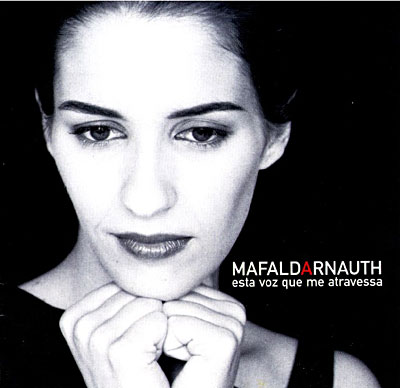
Después de la desaparición física de Amalia Rodrígues, una nueva generación de fadistas surgió en tierras lusitanas. Estas mujeres son las que han emprendido el camino de una renovación musical que estaba haciendo falta sin dejar de lado el espíritu que le imprimió la gran dama del fado fallecida en 1999. Mafalda Arnauth es ya, a sus 27 años, una de las principales referencias de esta nueva camada de jóvenes artistas.
Nacida en Lisboa en octubre de 1974, Mafalda Arnauth surgió como un meteoro en el Circuito do Fado después de participar en 1995, invitada por João Braga, en un espectáculo del Teatro San Luis, al lado de algunos de los grandes fadistas. Desde entonces, prácticamente no ha descansado: se ha presentado en distintos programas de televisión y radio y en los más importantes escenarios internacionales de Luxemburgo, Alemania, Francia, Grecia, España, Inglaterra y naturalmente, Portugal.
En 1996 entró como artista principal de la Taverna do Embuchado, uno de los grandes lugares del fado lisboeta y participó en la Cumbre sobre Lengua Lusitana, que tuvo lugar en Mozambique. Al año siguiente participó en un Certamen Internacional de Poesía. De allí acudió a Londres donde concretó varios shows junto a artistas argentinos. Ese mismo año, se presentó en Frankfurt en la Semana Cultural Portuguesa, que se celebró en esa ciudad alemana, junto al también fadista Helder Moutinho.
En 1998 grabó un concierto en la parisina Radio Alfa y participó en el Espacio del Fado que se organizó con motivo de la Expo-Lisboa 98. Fue invitada al Primer Encuentro Internacional de Fado y Tango y a uno de los festivales europeos de más prestigio, Tanz & FolkFest Rudolstadt, el mayor de todos los que se celebran en Alemania. Ese mismo año, participó en Innsbruck (Austria), en el Festival "Voices", con el espectáculo "Duas gerações a cantar o Fado" al lado de Maria Amélia Proença. Al siguiente año, puso su nombre como título de su primer trabajo discográfico, que le permitió ganar el premio a la mejor nueva voz otorgado por el prestigioso semanario Blitz.
Desde entonces su carrera internacional ha sido fulminante y unánimemente reconocida, como se puso de manifiesto con su presentación en Madrid, en la Casa de América, en noviembre del 2001, y también en otras capitales europeas, Bruselas, Ámsterdam, París y Lisboa. Ese mismo año publicó su segundo disco, "Esta voz que me atravessa" para la multinacional discográfica EMI el cual recibió excelentes críticas de los principales medios periodísticos del mundo. Fuente
Pistas:
01 - Esta voz que me atravessa 02 - O instante dos sentidos 03 - De não saber ser loucura 04 - Coisa assim 05 - Este silêncio que me corta 06 - Até logo, meu amor 07 - Não há fado que te resista 08 - Lusitana 09 - Há noite aqui 10 - Ai do vento 11 - Ora vai 12 - A casa e o mundo
Músicos:
Mafalda Arnauth: voz Ricardo Rocha: guitarra portuguesa José Elmiro Nunes: guitarra Paulo Paz: contrabajo
Acá viene uno de los volúmenes de la magnifica colección de "Putumayo presents..." esta vez sobre los blues del Mississippi, uno de los lugares constituidos en piedra basal del blues norteamericano.
Temas
01 - Part Time Love - Luther Allison 02 - Come On In This House - Junior Wells 03 - Mean Ol' Frisco - Arthur Big Boy Crudup 04 - The More You Lie To Me - Artie White 05 - 3 O'Clock In The Morning Blues - Ike & Tina Turner 06 - St. James Infirmary - Bobby Bland 07 - Make Me a Pallet On Your Floor 08 - Come On In My Kitchen - Chris Thomas King 09 - Baby Don't Do Me Wrong - John Lee Hooker 10 - I Got To Make A Change Blues - Memphis Minnie 11 - Stewball - Memphis Slim
Putumayo Presents Mississippi Blues, a musical journey down the Mississippi, from Memphis to New Orleans. The blues was born on the fertile soil that lines the banks of the mighty Mississippi River. Mississippi Blues includes artists who were born and raised near the river, many of whom left when they were adults to establish careers and new styles in Chicago, St. Louis, New York and other cities. Whether they stayed in the region or moved away, all of the artists on Mississippi Blues maintained a close connection to their rural blues traditions.
Mississippi Blues features artists with roots in the lower Mississippi region between Memphis and New Orleans. Innovators like Luther Allison and Ike and Tina Turner took the musical legacy of Robert Johnson and incorporated new regional and musical influences, making individual statements of their own. Geographically, the route extends from the electric sounds made in Chicago by Delta natives, to the sophisticated Memphis stylings of Tennessee's Bobby "Blue" Bland, to the river's final destination in Louisiana, where guitarist Chris Thomas King plays his own brand of blues.
The pool of artists nurtured by the Mississippi River is as wide and vast as the river itself. The cross-section of performers on Mississippi Blues is a distillation of the region's talent, and will lead the listener on a memorable musical voyage that will inspire a fresh look at the beauty and vitality of Mississippi blues. Mississippi Blues features detailed liner notes by respected New Orleans music critic Scott Jordan and images by noted photographer Jack Vartoogian. Fuente
Como Ravi Shankar explica en las notas de este disco, toda la música en el Oriente, a pesar de otras diferencias, se basa en estructuras similares. Este hecho le da la oportunidad de explorar una fusión de la música de la India con la de Japón. Así que aquí Ravi Shankar usa antiguas ragas indias (sistema de formas melódicas que forman la estructura de la música india), que utilizan cinco notas y es similar a los modos usados en la música japonesa, para llevar a cabo su experimento. De las seis piezas que contiene el CD, cinco son interpretadas con instrumentos indios (sitar, tanpura, tabla) y japoneses (el koto de cuerda y la flauta shakuchachi). De éstas, cuatro se basan en ragas indias, como se mencionó anteriormente, compuestas específicamente para acomodar el uso de instrumentos japoneses y para hacer la escucha muy agradable y meditativa. La otra pieza, que se llama "Improvisations on the theme of Rokudan", es una composición japonesa del siglo 17 para koto y aquí se ejecuta acompañado de los instrumentos indios. Considerando que todas las piezas de este disco, incluida la sexta, que es directamente una raga india, son fascinantemente hermosas, "Rokudan" es la más birllante. Existe una estructura ascendente en esta pieza que concluye con un crescendo magnífico que el mismo Shankar compuso. En general, la música en este disco parece tener una estructura, al contrario de otras grabaciones de música india que he escuchado, en la que se siente más libertad en su forma y que la hace más fácil de comprender para un oído occidental. Fuente
Músicos:
Ravi Shankar: sitar, tanpura, Prodyot Sen: tanpura Alla Rakha: tabla Hôzan Yamamoto: shakuhachi (flauta de bambú) Susumu Miyashita: koto ("arpa" horizontal japonesa)
Pistas:
1. Padhasapa 2. Kaharawa 3. Improvisation on the theme of "Rokudan" 4. Numah shivaya 5. Tribute to Nippon 6. Homage to Bab Allauddin
Γιώργος Νταλάρας (o romanizando su nombre Giórgos Ntaláras), también conocido como Yorgos o George Dalaras, es uno de los más célebres cantantes griegos contemporáneos. Nació en Nea Kokinia, Pireo el 29 de septiembre de 1949. Su padre Loúkas Ntaralas, era un famoso cantante de rebetiko.
En su carrera de canto casi de 40 años, Ntaláras ha actuado en miles de conciertos en Grecia y en varios países del mundo. Dos históricos conciertos en el Estadio Olímpico de Atenas al que asistieron 160.000 personas lo consagraron, según las revista Rolling Stone como responsable del nacimiento de la era de los conciertos en estadios en Grecia.
Muchos de sus conciertos fueron dedicados al problema político de Chipre, no sólo en 1974, sino también a finales de los años 80 y a principios de los años 90 donde realizó muchos conciertos por la causa de los chipriotas contra la invasión turca de 1974.
Ntaláras ha vendido más de 10.000.000 de discos en su carrera y es considerado como uno de los músicos más grandes en la música contemporánea griega. Ha viajado por todo el mundo y fue invitado para cantar en el cumpleaños de Nelson Mandela.
El 29 de agosto de 2004 encabezó la ceremonia de clausura de los Juegos Olímpicos de Atenas 2004 cantando junto con Haris Alexiou, Elefthería Arvanitáki y Dimitra Galani ante 70.000 personas. La ceremonia fue vista por millones de televidentes en todo el mundo.
Desde 1970 Giórgos Ntaláras ha grabado más de 120 discos. Cantando numerosos estilos de música diferentes (ej. rebetiko, laïkó, latino, la pequeña explosión), la música israelí y árabe, y la música religiosa. Ha colaborado con muchos compositores contemporáneos griegos, incluyendo a Míkis Theodorákis, Stavros Koujioumtzis, Mános Loizos, Apostolos Kaldaras, Stavros Xarhakos, Mános Chadjidákis, Hristos Nikolopoulos.
Aparte de su carrera de canto prominente, Ntaláras es considerado, uno de los mayores músicos griegos ejecutando la mayor parte de los instrumentos de cuerda en los discos de gente griega de mucho éxito, incluyendo la guitarra, bouzouki, baglama, tzoura y outi. De hecho, es un guitarrista sumamente dotado y ha tocado con Al Di Meola y Paco de Lucía, entre otros. En años recientes sin embargo, Ntaláras sólo toca la guitarra rítmica.
Los proyectos más importantes de Ntaláras incluyen colaboraciones con grupos y cantantes de renombre mundial, como Jethro Tull, Sting, Bruce Springsteen, Dulce Pontes, Emma Shapplin, entre otros.
Pistas:
01- Tribute To G. Zambetas 02- Enas Kompos I Hara Mou 03- Yparchi Logos 04- Logia Klidomena 05- Agrigento 06- Taxidi Sta Kythira 07- Idolo 08- Karanti 09- Ta Vegalika Sou Matia 10- I Balada Ton Esthiseon Ke Ton Paresthiseon 11- Limani - Anastasia Moutsatsou 12- To Pepromeno 13- Klirothika 14- Ta Matoklada Sou Lamboun (Your Eye-Lashes Are Shining) 15- Arapia 16- Dui Dui 17- Una Moneda Le Di 18- Voices - Joan Faulkner 19- Wooden Horse/Periplanisi - George Dalaras & Joan Faulkner
Six years ago, when Israeli keyboardist and composer Idan Raichel was an unknown musician working in a home studio in his parent's basement in a small city near Tel Aviv, he never imagined that his experiments fusing Israeli pop music with Middle Eastern, African, Indian and other global sounds would ever result in the biggest-selling records in Israeli history and propel him to a role as a major figure in the international global music scene. The Idan Raichel Project's explosive rise saw the multicultural collaborative break sales records in Israel and perform across the globe to rapturous crowds in some of the world's most prestigious venues. Along the way, his fan base has grown to include a wide, multigenerational public of non-Israelis, not to mention a few celebrities such as India.Arie, Green Day producer Rob Cavallo, and movie star Natalie Portman.
It was with this new perspective informed by growing fame and world travels that the dreadlocked leader of this groundbreaking ensemble returned to the recording studio to produce the Project's second international release, Within My Walls. The new album is available now in the US & Canada and the end of March elsewhere. Meanwhile, the Project is gearing up for extensive international touring, bringing an expanded lineup of a diverse mix of musicians to major stages throughout the coming year.
"To say that everything that has happened in the past six years was the fulfillment of a dream would imply that I even dreamed that any of this could happen," notes the humble Raichel, whose rise to fame was as much a shock to him as it was the skeptical Israeli music industry executives who said his multilingual, cross-cultural fusions would never find mainstream acceptance. Now, with a string of radio hits and concerts at the Sydney Opera House, the Kodak Theater in Los Angeles, New York's Central Park SummerStage, as well as concerts in India, Hong Kong, Mexico City, Moscow, Singapore, and more under his belt, Raichel admits that the reality has exceeded even his wildest dreams.
Indeed, themes of dreams versus reality, the conflicting desire to explore the world or stick with the comforts of home, and questions regarding how a person achieves personal fulfillment and true love are the underpinnings of Idan Raichel's new album. Raichel imagines a person who wakes up in the morning without a dream to fulfill. Does he remain confined within the walls of his room, laying in bed and dreaming of the world outside? Or does he find a reason to leave the room and discover what the world has to offer. Raichel seems to be wondering, which is better, the dream – or the reality? The songs' poetic lyrics, performed in Hebrew, Spanish, Arabic and Swahili, propose no answers, but lead the listener to ponder their own conclusions.
Much of Within My Walls was recorded over the past few years while Idan was on tour, during recording sessions in hotel rooms, backstage dressing areas, private homes and other impromptu settings. During his extensive travels, Idan met with scores of musicians from diverse backgrounds, and ever the collaborator, he made sure to exchange musical ideas with them. Along the way, he recorded and co-wrote songs with Colombian singer Marta Gómez, Cape Verdean luminary Mayra Andrade and the silken-voiced Somi of Rwandan and Ugandan heritage.
Returning to Israel with basic tracks from his musical collaborations while on the road, Idan retreated to a small studio in Tel Aviv with his usual co-producer, Gilad Shmueli. Inspired by the lush, moody strings of British singer-songwriter Nick Drake, Idan assembled a 24-piece orchestra and worked with Israeli arranger Assaf Dar to transpose his engaging melodies to an orchestral setting. Idan also invited some of his favorite musicians, such as percussionist Zohar Fresco, traditional flute and woodwinds specialist Eyal Sela, Mark Eliyahu on kamancheh (a traditional Persian spike fiddle), and legendary bassist Alon Nadel to lend their talents to the recording.
Idan also has a gift for finding the perfect vocalists to fit his compositions, including longtime collaborator Maya Avraham, as well as rising stars Amir Dadon, Anat Ben Hamo and Ilan Damti. Idan invited Moroccan-Israeli singer Shimon Buskila to sing and write lyrics for the emotionally wrenching track "From the Day You Left", a raw Arabic-language ode to the singer's late mother. Much to the delight of his fans, Idan steps out from behind the keyboard and sings three songs himself.
The result is a deeply moving recording, overflowing with rich melodies, engaging poetry, stunning vocal performances and intricate arrangements. The album opens with the dreamlike "All the Words", which features the enchanting Spanish-language vocals of Marta Gómez. "She wrote her own words for this and I recorded it," notes Idan, "It's a very simple production, just her voice over the percussion her husband, Argentinean percussionist Franco Pinna, laid down. Then I brought it back to Israel and added the Middle Eastern strings, the tar and the oud, and also the flutes, just to make it closer to my home, so it would sound like an Israeli track rather than a South American one."
The album's title track follows, featuring Idan on vocals. With its lyrics dealing with walls and the way they simultaneously protect and isolate people, it is easy to interpret the song as a commentary on the Palestinian-Israeli conflict, but Idan denies any overt political agenda in his songs. "I have a strong political view about the situation in Israel," he points out, "But I refuse to say what I think about it because I still see myself as a representative for the musicians and singers of the Project in and out of Israel. We may have opposing viewpoints, but we can relate on an artistic level, and I don't want differences of opinion on politics to come between us."
However, Idan does admit "You cannot close people in walls. They'll immediately want to break them. Even if you have a kid and you want him to stay away from something, you don't build a wall around him to force him to stay away, you just explain to him why it's important to stay away from this. If you just build a wall and say to stay away, he will break the wall and want to get there anyway."
Another highlight of Within My Walls is the soulful Cape Verdean Creole song "With My Eyes Shut" sung by Mayra Andrade. Idan met Mayra in Paris and was immediately impressed with her talent and professionalism. "Mayra not only knows where she's heading to all the time, because she's managing a great career, but she always remembers where she came from," notes Idan, "I think other young people in her age group might do some rap music or whatever, but she still adores and appreciates the music she grew up with." The two recorded Mayra's vocals in the conference room of a Parisian hotel where Idan set up a remote studio.
The album closes with a heart-wrenching performance by African singer Somi, who sings in Swahili of a young orphaned girl who calls to light of the moon for someone to save her. During the recording of the song, Somi became so immersed in the mournful tale of the impact of war and violence on Africa's youth that she was brought to tears. Magically, the song manages to make a connection both thematically and musically with the impact of the Holocaust on Idan's own family. "The melody of "Maisha" is like a Jewish song from Poland," he points out, "It is very influenced by the melodies I heard in my grandmother's house, very Eastern European, very simple, yet it goes straight to the heart."
With the release of Within My Walls, the Idan Raichel Project prepares to embark on their next great adventure by bringing their music to en even wider audience across the globe. The album will be released by Cumbancha, a record label founded by Jacob Edgar, the longtime head of the A&R and music research at Putumayo. Dedicated to presenting exceptional artists from around the world to a wider audience, Cumbancha has worked closely with the Idan Raichel Project since it released their eponymous first international release in the fall of 2006. With major tour dates planned for 2009 in North America, Europe, Latin America and other regions, the Idan Raichel Project will be breaking down walls for years to come.
Within My Walls Featured Artist Biographies:
Mayra Andrade - Although she was born in Cuba, the young singer Mayra Andrade grew up surrounded buy the Cape Verdean music and culture of her parents. She started performing at the age of sixteen and released her highly praised debut album in 2006. She has since become one of the most popular artists in the international world music scene, performing at New York’s Carnegie Hall and other prestigious venues. Idan met Mayra in Paris, where she now lives, and, impressed with her lovely voice and presence, invited her to write Creole lyrics and sing on the song “With My Eyes Shut.”
Maya Avraham - The collaboration with Maya started with The Idan Raichel Project's second Israeli album, Out Of The Depths, on which Maya was the featured soloist on the song “From All the Loves.” Maya joined the touring cast of The Project and performed with Idan around the world. A year ago Maya released her first solo album and she is now collecting songs for her second album. Maya was delighted to accept Idan's invitation to sing 'Stay' on the new IRP album.
Anat Ben-Hamo – A young singer-songwriter who used to sing solo with the jazz band Common Band. Anat is currently working with her brother on an album influenced by the American folk singers of the ‘60s. Idan saw Anat performing, loved her voice, her professionalism and her special approach to her music and invited her to record the song “River Waters.”
Shimon Buskila – A popular singer of Moroccan heritage, Buskila is the founder of the band Sahar, with whom he has released two albums. Shimon has also written many songs for other artists and has released two solo albums. Shimon was honored to write for Idan and their collaboration developed into the song “From the Day You Left.”
Amir Dadon – A singer and musician, Amir started his musical career as a child in Eilat, a city on the southern border of Israel, where Israel meets Egypt and Jordan. In 2001 Amir began performing with his band, taking his original material to audiences up and down the country. He signed with Israeli label Helicon Records in January 2008 and is currently completing work on his first album. The connection between Amir and Idan came about when Gilad Shmueli, Idan's co-producer, heard Amir perform and was so impressed he introduced him to Idan. Idan liked what he saw and heard and decided to record the song 'Scraps of Life' with Amir.
Ilan Damti – This is the second time that Idan has asked Ilan to sing on one of The Project's albums, the first time being on the second Israeli album Out Of The Depths for which Ilan soloed on the song “Shuvi El Beiti.” As well as singing on The Project's albums, Ilan works as the lighting operator for its shows. On the new album Ilan sings the song 'Most of The Hours'.
Marta Gómez – Since graduating Magna Cum Laude from the Berklee College of Music, Colombian singer and songwriter Marta Gómez has earned a devoted following through her successful touring and recording career. Not withstanding her youth, Marta has written over 70 songs, and has four critically acclaimed albums under her belt. She now lives in the New York City area and is backed in concert by a band that includes her husband, Argentinean percussionist Franco Pinna.
David “Duke Mushroom” Schommer - A New York-based musician and producer, David Schommer started playing drums and keyboards when he was just 5 years old, founded his first band when he was 10 and went on to study at Boston’s prestigious Berklee School of Music. Schommer has worked in the techno scene of Detroit, the TV and film industry in Los Angeles, and even took a turn Off-Broadway as a member of the original US cast of Stomp. Though earning fame as a producer and musician for pop stars such as Janet Jackson and Gloria Estefan, Schommer decided to turn his attention to his passion for Ethiopian music, and working with producer Steve Mac, released the acclaimed album Bole 2 Harlem in 2006. It was during his research for this project in Ethiopia that Schommer first came across Idan Raichel, and Idan remembers him as the “white guy with a funny beard” that jumped on stage and started dancing during the Idan Raichel’s Project’s January 2006 concert in Addis Ababa. Eventually, the two formally met in New York and have become close friends and collaborators.
Gilad Shmueli - Musician and producer, who has played the drums since his childhood, at age 16 Gilad played with a band called Riding Gimel, formed by his older brothers. At 17, Gilan started playing with Ivri Lider, with whom he still records and performs, and has also worked with other artists including Funkenstein, Gilad Segev and Ben Artzi. Idan and Gilad first met when they were both playing with Ivri Lider. Since then and right from The Project's first album, Gilad has worked with Idan as co-producer and arranger. Gilad also collaborates with Idan in the live shows.
Somi – L. Kabasomi Kakoma, better known as Somi, was born in Illinois to East African parents, whose careers as diplomats and professors exposed her to music and culture from all over the world. Somi has lived in Zambia, Kenya and Tanzania, and now makes her home in New York City, where she performs regularly. Somi has released two albums, which feature her unique blend of jazz, African music and soul. Idan was introduced to Somi through a mutual friend, Cameroonian singer Kaïssa, and they immediately hit it off and agreed to perform and record together.
Shai Tzabari - Shai took his first musical steps at his neighborhood Yemenite Synagogue, under the wings of his father the Cantor. Shai studied at the Rimon School of Music and was a member in the band Majik. After numerous collaborations with other popular Israeli artists, including Ehud Banai, Tal Segev, Zeev Tene, and Bari Saharof, Shai is now working on his solo album. Idan remembered how struck he was by Shai's voice when he first heard him singing eight years ago, and invited Shai to record the song “Locked in His Gaze” for the new IRP album.
Track list:
01. Todas las palabras (All the Words) 02. Bein kirot beiti (Within my walls) 03. She'eriot shel ha'chaim (Scraps of life) 04. Mai nahar (River waters) 05. Chalomot shel acherim (Other people's dreams) 06. Ôdjus fitxadu (With my eyes shut) 07. Shev (Stay) 08. Rov ha'sha'ot (Most of the hours) 09. Min nhar li mshiti (From the day you left) 10. Cada día (Every day) 11. Hakol over (This too shall pass) 12. Nin'al be'mabato (Locked in his gaze) 13. Maisha