Acá viene uno de los volúmenes de la magnifica colección de "Putumayo presents..." esta vez sobre los blues del Mississippi, uno de los lugares constituidos en piedra basal del blues norteamericano.
Temas
01 - Part Time Love - Luther Allison 02 - Come On In This House - Junior Wells 03 - Mean Ol' Frisco - Arthur Big Boy Crudup 04 - The More You Lie To Me - Artie White 05 - 3 O'Clock In The Morning Blues - Ike & Tina Turner 06 - St. James Infirmary - Bobby Bland 07 - Make Me a Pallet On Your Floor 08 - Come On In My Kitchen - Chris Thomas King 09 - Baby Don't Do Me Wrong - John Lee Hooker 10 - I Got To Make A Change Blues - Memphis Minnie 11 - Stewball - Memphis Slim
Putumayo Presents Mississippi Blues, a musical journey down the Mississippi, from Memphis to New Orleans. The blues was born on the fertile soil that lines the banks of the mighty Mississippi River. Mississippi Blues includes artists who were born and raised near the river, many of whom left when they were adults to establish careers and new styles in Chicago, St. Louis, New York and other cities. Whether they stayed in the region or moved away, all of the artists on Mississippi Blues maintained a close connection to their rural blues traditions.
Mississippi Blues features artists with roots in the lower Mississippi region between Memphis and New Orleans. Innovators like Luther Allison and Ike and Tina Turner took the musical legacy of Robert Johnson and incorporated new regional and musical influences, making individual statements of their own. Geographically, the route extends from the electric sounds made in Chicago by Delta natives, to the sophisticated Memphis stylings of Tennessee's Bobby "Blue" Bland, to the river's final destination in Louisiana, where guitarist Chris Thomas King plays his own brand of blues.
The pool of artists nurtured by the Mississippi River is as wide and vast as the river itself. The cross-section of performers on Mississippi Blues is a distillation of the region's talent, and will lead the listener on a memorable musical voyage that will inspire a fresh look at the beauty and vitality of Mississippi blues. Mississippi Blues features detailed liner notes by respected New Orleans music critic Scott Jordan and images by noted photographer Jack Vartoogian. Fuente
Como Ravi Shankar explica en las notas de este disco, toda la música en el Oriente, a pesar de otras diferencias, se basa en estructuras similares. Este hecho le da la oportunidad de explorar una fusión de la música de la India con la de Japón. Así que aquí Ravi Shankar usa antiguas ragas indias (sistema de formas melódicas que forman la estructura de la música india), que utilizan cinco notas y es similar a los modos usados en la música japonesa, para llevar a cabo su experimento. De las seis piezas que contiene el CD, cinco son interpretadas con instrumentos indios (sitar, tanpura, tabla) y japoneses (el koto de cuerda y la flauta shakuchachi). De éstas, cuatro se basan en ragas indias, como se mencionó anteriormente, compuestas específicamente para acomodar el uso de instrumentos japoneses y para hacer la escucha muy agradable y meditativa. La otra pieza, que se llama "Improvisations on the theme of Rokudan", es una composición japonesa del siglo 17 para koto y aquí se ejecuta acompañado de los instrumentos indios. Considerando que todas las piezas de este disco, incluida la sexta, que es directamente una raga india, son fascinantemente hermosas, "Rokudan" es la más birllante. Existe una estructura ascendente en esta pieza que concluye con un crescendo magnífico que el mismo Shankar compuso. En general, la música en este disco parece tener una estructura, al contrario de otras grabaciones de música india que he escuchado, en la que se siente más libertad en su forma y que la hace más fácil de comprender para un oído occidental. Fuente
Músicos:
Ravi Shankar: sitar, tanpura, Prodyot Sen: tanpura Alla Rakha: tabla Hôzan Yamamoto: shakuhachi (flauta de bambú) Susumu Miyashita: koto ("arpa" horizontal japonesa)
Pistas:
1. Padhasapa 2. Kaharawa 3. Improvisation on the theme of "Rokudan" 4. Numah shivaya 5. Tribute to Nippon 6. Homage to Bab Allauddin
Γιώργος Νταλάρας (o romanizando su nombre Giórgos Ntaláras), también conocido como Yorgos o George Dalaras, es uno de los más célebres cantantes griegos contemporáneos. Nació en Nea Kokinia, Pireo el 29 de septiembre de 1949. Su padre Loúkas Ntaralas, era un famoso cantante de rebetiko.
En su carrera de canto casi de 40 años, Ntaláras ha actuado en miles de conciertos en Grecia y en varios países del mundo. Dos históricos conciertos en el Estadio Olímpico de Atenas al que asistieron 160.000 personas lo consagraron, según las revista Rolling Stone como responsable del nacimiento de la era de los conciertos en estadios en Grecia.
Muchos de sus conciertos fueron dedicados al problema político de Chipre, no sólo en 1974, sino también a finales de los años 80 y a principios de los años 90 donde realizó muchos conciertos por la causa de los chipriotas contra la invasión turca de 1974.
Ntaláras ha vendido más de 10.000.000 de discos en su carrera y es considerado como uno de los músicos más grandes en la música contemporánea griega. Ha viajado por todo el mundo y fue invitado para cantar en el cumpleaños de Nelson Mandela.
El 29 de agosto de 2004 encabezó la ceremonia de clausura de los Juegos Olímpicos de Atenas 2004 cantando junto con Haris Alexiou, Elefthería Arvanitáki y Dimitra Galani ante 70.000 personas. La ceremonia fue vista por millones de televidentes en todo el mundo.
Desde 1970 Giórgos Ntaláras ha grabado más de 120 discos. Cantando numerosos estilos de música diferentes (ej. rebetiko, laïkó, latino, la pequeña explosión), la música israelí y árabe, y la música religiosa. Ha colaborado con muchos compositores contemporáneos griegos, incluyendo a Míkis Theodorákis, Stavros Koujioumtzis, Mános Loizos, Apostolos Kaldaras, Stavros Xarhakos, Mános Chadjidákis, Hristos Nikolopoulos.
Aparte de su carrera de canto prominente, Ntaláras es considerado, uno de los mayores músicos griegos ejecutando la mayor parte de los instrumentos de cuerda en los discos de gente griega de mucho éxito, incluyendo la guitarra, bouzouki, baglama, tzoura y outi. De hecho, es un guitarrista sumamente dotado y ha tocado con Al Di Meola y Paco de Lucía, entre otros. En años recientes sin embargo, Ntaláras sólo toca la guitarra rítmica.
Los proyectos más importantes de Ntaláras incluyen colaboraciones con grupos y cantantes de renombre mundial, como Jethro Tull, Sting, Bruce Springsteen, Dulce Pontes, Emma Shapplin, entre otros.
Pistas:
01- Tribute To G. Zambetas 02- Enas Kompos I Hara Mou 03- Yparchi Logos 04- Logia Klidomena 05- Agrigento 06- Taxidi Sta Kythira 07- Idolo 08- Karanti 09- Ta Vegalika Sou Matia 10- I Balada Ton Esthiseon Ke Ton Paresthiseon 11- Limani - Anastasia Moutsatsou 12- To Pepromeno 13- Klirothika 14- Ta Matoklada Sou Lamboun (Your Eye-Lashes Are Shining) 15- Arapia 16- Dui Dui 17- Una Moneda Le Di 18- Voices - Joan Faulkner 19- Wooden Horse/Periplanisi - George Dalaras & Joan Faulkner
Six years ago, when Israeli keyboardist and composer Idan Raichel was an unknown musician working in a home studio in his parent's basement in a small city near Tel Aviv, he never imagined that his experiments fusing Israeli pop music with Middle Eastern, African, Indian and other global sounds would ever result in the biggest-selling records in Israeli history and propel him to a role as a major figure in the international global music scene. The Idan Raichel Project's explosive rise saw the multicultural collaborative break sales records in Israel and perform across the globe to rapturous crowds in some of the world's most prestigious venues. Along the way, his fan base has grown to include a wide, multigenerational public of non-Israelis, not to mention a few celebrities such as India.Arie, Green Day producer Rob Cavallo, and movie star Natalie Portman.
It was with this new perspective informed by growing fame and world travels that the dreadlocked leader of this groundbreaking ensemble returned to the recording studio to produce the Project's second international release, Within My Walls. The new album is available now in the US & Canada and the end of March elsewhere. Meanwhile, the Project is gearing up for extensive international touring, bringing an expanded lineup of a diverse mix of musicians to major stages throughout the coming year.
"To say that everything that has happened in the past six years was the fulfillment of a dream would imply that I even dreamed that any of this could happen," notes the humble Raichel, whose rise to fame was as much a shock to him as it was the skeptical Israeli music industry executives who said his multilingual, cross-cultural fusions would never find mainstream acceptance. Now, with a string of radio hits and concerts at the Sydney Opera House, the Kodak Theater in Los Angeles, New York's Central Park SummerStage, as well as concerts in India, Hong Kong, Mexico City, Moscow, Singapore, and more under his belt, Raichel admits that the reality has exceeded even his wildest dreams.
Indeed, themes of dreams versus reality, the conflicting desire to explore the world or stick with the comforts of home, and questions regarding how a person achieves personal fulfillment and true love are the underpinnings of Idan Raichel's new album. Raichel imagines a person who wakes up in the morning without a dream to fulfill. Does he remain confined within the walls of his room, laying in bed and dreaming of the world outside? Or does he find a reason to leave the room and discover what the world has to offer. Raichel seems to be wondering, which is better, the dream – or the reality? The songs' poetic lyrics, performed in Hebrew, Spanish, Arabic and Swahili, propose no answers, but lead the listener to ponder their own conclusions.
Much of Within My Walls was recorded over the past few years while Idan was on tour, during recording sessions in hotel rooms, backstage dressing areas, private homes and other impromptu settings. During his extensive travels, Idan met with scores of musicians from diverse backgrounds, and ever the collaborator, he made sure to exchange musical ideas with them. Along the way, he recorded and co-wrote songs with Colombian singer Marta Gómez, Cape Verdean luminary Mayra Andrade and the silken-voiced Somi of Rwandan and Ugandan heritage.
Returning to Israel with basic tracks from his musical collaborations while on the road, Idan retreated to a small studio in Tel Aviv with his usual co-producer, Gilad Shmueli. Inspired by the lush, moody strings of British singer-songwriter Nick Drake, Idan assembled a 24-piece orchestra and worked with Israeli arranger Assaf Dar to transpose his engaging melodies to an orchestral setting. Idan also invited some of his favorite musicians, such as percussionist Zohar Fresco, traditional flute and woodwinds specialist Eyal Sela, Mark Eliyahu on kamancheh (a traditional Persian spike fiddle), and legendary bassist Alon Nadel to lend their talents to the recording.
Idan also has a gift for finding the perfect vocalists to fit his compositions, including longtime collaborator Maya Avraham, as well as rising stars Amir Dadon, Anat Ben Hamo and Ilan Damti. Idan invited Moroccan-Israeli singer Shimon Buskila to sing and write lyrics for the emotionally wrenching track "From the Day You Left", a raw Arabic-language ode to the singer's late mother. Much to the delight of his fans, Idan steps out from behind the keyboard and sings three songs himself.
The result is a deeply moving recording, overflowing with rich melodies, engaging poetry, stunning vocal performances and intricate arrangements. The album opens with the dreamlike "All the Words", which features the enchanting Spanish-language vocals of Marta Gómez. "She wrote her own words for this and I recorded it," notes Idan, "It's a very simple production, just her voice over the percussion her husband, Argentinean percussionist Franco Pinna, laid down. Then I brought it back to Israel and added the Middle Eastern strings, the tar and the oud, and also the flutes, just to make it closer to my home, so it would sound like an Israeli track rather than a South American one."
The album's title track follows, featuring Idan on vocals. With its lyrics dealing with walls and the way they simultaneously protect and isolate people, it is easy to interpret the song as a commentary on the Palestinian-Israeli conflict, but Idan denies any overt political agenda in his songs. "I have a strong political view about the situation in Israel," he points out, "But I refuse to say what I think about it because I still see myself as a representative for the musicians and singers of the Project in and out of Israel. We may have opposing viewpoints, but we can relate on an artistic level, and I don't want differences of opinion on politics to come between us."
However, Idan does admit "You cannot close people in walls. They'll immediately want to break them. Even if you have a kid and you want him to stay away from something, you don't build a wall around him to force him to stay away, you just explain to him why it's important to stay away from this. If you just build a wall and say to stay away, he will break the wall and want to get there anyway."
Another highlight of Within My Walls is the soulful Cape Verdean Creole song "With My Eyes Shut" sung by Mayra Andrade. Idan met Mayra in Paris and was immediately impressed with her talent and professionalism. "Mayra not only knows where she's heading to all the time, because she's managing a great career, but she always remembers where she came from," notes Idan, "I think other young people in her age group might do some rap music or whatever, but she still adores and appreciates the music she grew up with." The two recorded Mayra's vocals in the conference room of a Parisian hotel where Idan set up a remote studio.
The album closes with a heart-wrenching performance by African singer Somi, who sings in Swahili of a young orphaned girl who calls to light of the moon for someone to save her. During the recording of the song, Somi became so immersed in the mournful tale of the impact of war and violence on Africa's youth that she was brought to tears. Magically, the song manages to make a connection both thematically and musically with the impact of the Holocaust on Idan's own family. "The melody of "Maisha" is like a Jewish song from Poland," he points out, "It is very influenced by the melodies I heard in my grandmother's house, very Eastern European, very simple, yet it goes straight to the heart."
With the release of Within My Walls, the Idan Raichel Project prepares to embark on their next great adventure by bringing their music to en even wider audience across the globe. The album will be released by Cumbancha, a record label founded by Jacob Edgar, the longtime head of the A&R and music research at Putumayo. Dedicated to presenting exceptional artists from around the world to a wider audience, Cumbancha has worked closely with the Idan Raichel Project since it released their eponymous first international release in the fall of 2006. With major tour dates planned for 2009 in North America, Europe, Latin America and other regions, the Idan Raichel Project will be breaking down walls for years to come.
Within My Walls Featured Artist Biographies:
Mayra Andrade - Although she was born in Cuba, the young singer Mayra Andrade grew up surrounded buy the Cape Verdean music and culture of her parents. She started performing at the age of sixteen and released her highly praised debut album in 2006. She has since become one of the most popular artists in the international world music scene, performing at New York’s Carnegie Hall and other prestigious venues. Idan met Mayra in Paris, where she now lives, and, impressed with her lovely voice and presence, invited her to write Creole lyrics and sing on the song “With My Eyes Shut.”
Maya Avraham - The collaboration with Maya started with The Idan Raichel Project's second Israeli album, Out Of The Depths, on which Maya was the featured soloist on the song “From All the Loves.” Maya joined the touring cast of The Project and performed with Idan around the world. A year ago Maya released her first solo album and she is now collecting songs for her second album. Maya was delighted to accept Idan's invitation to sing 'Stay' on the new IRP album.
Anat Ben-Hamo – A young singer-songwriter who used to sing solo with the jazz band Common Band. Anat is currently working with her brother on an album influenced by the American folk singers of the ‘60s. Idan saw Anat performing, loved her voice, her professionalism and her special approach to her music and invited her to record the song “River Waters.”
Shimon Buskila – A popular singer of Moroccan heritage, Buskila is the founder of the band Sahar, with whom he has released two albums. Shimon has also written many songs for other artists and has released two solo albums. Shimon was honored to write for Idan and their collaboration developed into the song “From the Day You Left.”
Amir Dadon – A singer and musician, Amir started his musical career as a child in Eilat, a city on the southern border of Israel, where Israel meets Egypt and Jordan. In 2001 Amir began performing with his band, taking his original material to audiences up and down the country. He signed with Israeli label Helicon Records in January 2008 and is currently completing work on his first album. The connection between Amir and Idan came about when Gilad Shmueli, Idan's co-producer, heard Amir perform and was so impressed he introduced him to Idan. Idan liked what he saw and heard and decided to record the song 'Scraps of Life' with Amir.
Ilan Damti – This is the second time that Idan has asked Ilan to sing on one of The Project's albums, the first time being on the second Israeli album Out Of The Depths for which Ilan soloed on the song “Shuvi El Beiti.” As well as singing on The Project's albums, Ilan works as the lighting operator for its shows. On the new album Ilan sings the song 'Most of The Hours'.
Marta Gómez – Since graduating Magna Cum Laude from the Berklee College of Music, Colombian singer and songwriter Marta Gómez has earned a devoted following through her successful touring and recording career. Not withstanding her youth, Marta has written over 70 songs, and has four critically acclaimed albums under her belt. She now lives in the New York City area and is backed in concert by a band that includes her husband, Argentinean percussionist Franco Pinna.
David “Duke Mushroom” Schommer - A New York-based musician and producer, David Schommer started playing drums and keyboards when he was just 5 years old, founded his first band when he was 10 and went on to study at Boston’s prestigious Berklee School of Music. Schommer has worked in the techno scene of Detroit, the TV and film industry in Los Angeles, and even took a turn Off-Broadway as a member of the original US cast of Stomp. Though earning fame as a producer and musician for pop stars such as Janet Jackson and Gloria Estefan, Schommer decided to turn his attention to his passion for Ethiopian music, and working with producer Steve Mac, released the acclaimed album Bole 2 Harlem in 2006. It was during his research for this project in Ethiopia that Schommer first came across Idan Raichel, and Idan remembers him as the “white guy with a funny beard” that jumped on stage and started dancing during the Idan Raichel’s Project’s January 2006 concert in Addis Ababa. Eventually, the two formally met in New York and have become close friends and collaborators.
Gilad Shmueli - Musician and producer, who has played the drums since his childhood, at age 16 Gilad played with a band called Riding Gimel, formed by his older brothers. At 17, Gilan started playing with Ivri Lider, with whom he still records and performs, and has also worked with other artists including Funkenstein, Gilad Segev and Ben Artzi. Idan and Gilad first met when they were both playing with Ivri Lider. Since then and right from The Project's first album, Gilad has worked with Idan as co-producer and arranger. Gilad also collaborates with Idan in the live shows.
Somi – L. Kabasomi Kakoma, better known as Somi, was born in Illinois to East African parents, whose careers as diplomats and professors exposed her to music and culture from all over the world. Somi has lived in Zambia, Kenya and Tanzania, and now makes her home in New York City, where she performs regularly. Somi has released two albums, which feature her unique blend of jazz, African music and soul. Idan was introduced to Somi through a mutual friend, Cameroonian singer Kaïssa, and they immediately hit it off and agreed to perform and record together.
Shai Tzabari - Shai took his first musical steps at his neighborhood Yemenite Synagogue, under the wings of his father the Cantor. Shai studied at the Rimon School of Music and was a member in the band Majik. After numerous collaborations with other popular Israeli artists, including Ehud Banai, Tal Segev, Zeev Tene, and Bari Saharof, Shai is now working on his solo album. Idan remembered how struck he was by Shai's voice when he first heard him singing eight years ago, and invited Shai to record the song “Locked in His Gaze” for the new IRP album.
Track list:
01. Todas las palabras (All the Words) 02. Bein kirot beiti (Within my walls) 03. She'eriot shel ha'chaim (Scraps of life) 04. Mai nahar (River waters) 05. Chalomot shel acherim (Other people's dreams) 06. Ôdjus fitxadu (With my eyes shut) 07. Shev (Stay) 08. Rov ha'sha'ot (Most of the hours) 09. Min nhar li mshiti (From the day you left) 10. Cada día (Every day) 11. Hakol over (This too shall pass) 12. Nin'al be'mabato (Locked in his gaze) 13. Maisha
Argentinos en su totalidad, Los Andariegos nacen en San Rafael, Mendoza en 1954. Sus fundadores fueron: Pedro Floreal Cladera (Chacho Santa Cruz), Rafael Tapia, Juan Carlos (Pato) Rodríguez, Ángel Ritrovano (Cacho Ritro), Abel González y Francisco (Rubio) Giménez.
Trabajaron armonías con terceras, cuartas y quintas, lo que fue una revolución, ya que en esa época (los '50), los grupos armonizaban sólo con primeras y segundas voces. A fines de 1959, se aleja Chacho y tiempo después ingresa Raúl Mercado. En 1964 se aleja Abel González y un año mas tarde Alberto
Sará se incorpora en lugar de Juan Carlos Rodríguez. Raúl Mercado y Agustín Gómez ocuparon los lugares de dos de los miembros originales. Era época de largas temporadas en LR4 Radio Splendid y de largas giras por todo el país. El repertorio fue variando con el tiempo.
Desde lo más tradicional y paisajístico hasta canciones de alto contenido social y testimonial, lo que trajo graves problemas a algunos de sus integrantes. En el año 1958 graban su primer Long Play con el sello ODEON, y el grupo se instala en Buenos Aires, donde ganaron peso dentro del panorama del folclore. Alberto Sará luego abandona el grupo, lo reemplazará Caro Herrada hasta su fallecimiento y Pepete Bertiz (Guitarrista de Mercedes Sosa) fue también un integrante hasta su pronta desaparición.
Posee una discografía numerosa habiendo recorrido primeramente todo su país, posteriormente Chile, Bolivia, Brasil y Uruguay. En 1975 realiza una gira por Japón, junto a Mercedes Sosa, retomando en 1977, y en 1978 se ve obligado a disolverse amenazado por la dictadura militar. Ángel Ritro se dirige España acompañando a Alberto Cortés.
Raúl Mercado se radica en Francia prosiguiendo su carrera de intérprete y compositor. Agustín Gómez y Karo Herrada continúan el trabajo y esta vez junto a Carlos Groisman y Héctor Staforini con gran experiencia docente conocidos arregladores y compositores. En el año 1981 muere en su provincia natal (Mendoza) Karo Herrada y Carlos Groisman y Héctor Staforini continúan otro destino. En el año 1991 Juan Carlos Varela, Andrés Gómez, Jorge Giuliano y luego Néstor Basurto, jóvenes músicos se unen al talento y experiencia de Agustín Gómez para revivir una vez más a este grupo.
El primer objetivo fue lograr el sonido fielmente que antiguos Andariegos habían creado y desde allí proyectar un repertorio no muy conocido por el publico.
A partir de 1998 se reagrupan en Barcelona a iniciativa del músico y productor Gilberto Piedras, luego de más de veinte años de separación, el grupo constituido por Ángel Ritro, Raúl Mercado, Agustín Gómez, Leonardo Sánchez y Gilberto Piedras, realizan giras en los mejores teatros de España, y en diferentes salas de nuestro País, junto a nuestro compatriota ALBERTO CORTEZ, culminando con la inolvidable presentación en el Teatro OLYMPIA de París, el 30 de Abril de 2001. En 2003 hacen una gira en las Islas Canarias y ante la imposibilidad de viajar de Agustín Gómez, éste fue reemplazado por Roberto López.
Así pareciera culminar la historia de Los Andariegos, conjunto que muchos consideran como el más renovador y original del cancionero Argentino.
Una anécdota sobre este cd gracias por el aporte !
LO PRIMERO ES LA CULTURA por Osvaldo Fornasari
Cuando vienen las canas, o se va el pelo, es cuando se puede apelar al "archivo de la memoria" para refrescar hechos que guardan siempre alguna connotación feliz, emotiva, gratificante...e incluso de las otras. Por eso hoy me animo a anotarme en la sección de la Página Andariega, con un recuerdo de aquella actuación del grupo en Villaguay y de la que ha quedado el testimonio que se incluye en las fotos que Alejandra ha logrado recopilar.
Eran tiempos - una vez más - de gobierno militar tras el derrocamiento de Isabel Martínez y que habían promovido en mi pueblo a un intendente civil al que habíamos bautizado "Chichón" porque siempre aparecía después de cada golpe, lógicamente sentado en el sillón municipal por las fuerzas gobernantes de turno.
Dada la presentación de Los Andariegos como producto de una "locura empresarial" de la incipiente cofradía villaguayense, quisimos " estar en el detalle" invitando al intendente y a la Plana Mayor de la Guarnición Militar, lo que era lo mismo que decir a las verdaderas autoridades. Para nuestra satisfacción ,asistieron todos y se los ubicó en lugar preferencial de la platea, como para que no perdieran nada de la actuación de nuestros ídolos.
Nosotros, humildemente, presenciábamos el recital desde el fondo de la sala, asumiendo nuestro rol de organizadores en todo sentido.
Los aplausos de la concurrencia se hacían escuchar tras cada interpretación y nos permitía no disimular nuestro orgullo. Sin embargo, en un determinado momento, se escucharon rasgueos, acordes y arreglos para nosotros inconfundibles y que hicieron que nos mirásemos al unísono como si estuviésemos alineándonos en una formación de los tiempos de "colimba".
Un sudor frío comenzó a correr, al menos por mi frente y el gesto adusto de los demás terminó por hacerme temblar. Estos inconscientes estaban cantando EL CÓNDOR VUELVE..!!!! ¡Tan luego en esa época..!!! ...Cuando el tema terminó, según nuestro "aplausómetro" humano, fue uno de los más celebrados por el público ...INCLUSO POR LAS AUTORIDADES..!!!
Los colores nos volvieron al rostro y más aún al final, cuando todos fueron elogios por semejante espectáculo. Nos felicitaban por la calidad del grupo y por nuestro aporte a "la cultura" de una ciudad. Me animé a tomar la palabra:
"Gracias señor", le dije a uno de los jefes. "Nosotros estamos tan felices como Uds. por creer que más allá del tipo de manifestación de que se trate, LO PRIMERO ES LA CULTURA"....
Mi admiración a mis queridos Anda y a los dos maestros Mercado - maria antonieta
01 - El cóndor vuelve 02 - Romance del molinero 03 - Viva Jujuy 04 - Zamba de la distancia 05 - Hombre en el tiempo 06 - Dinh Hung, juglar 07 - Fundamento coplero 08 - Aria campesina 09 - A quien canta la vida 10 - Hacia el surco 11 - Celino maestro 12 - Si un hijo quieren de mí
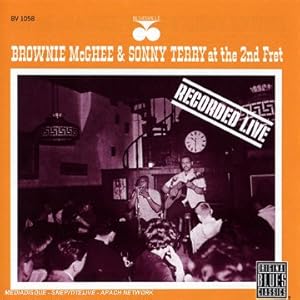
Sonny Terry y Brownie McGhee son dos músicos de blues, que han pasado a la posteridad, a la historia de la música, al conformar Sonny and Brownie, un duo de Piedmont Blues que pasó las fronteras. Que disfruten este disco.
Pistas:
01. Evil hearted me 02. Sick man 03. Barking bulldog 04. Spread the news around 05. Backwater blues 06. Custard pie blues 07. Wholesale dealin' papa 08. Motorcycle blues 09. Hand in hand 10. I woke up one morning and I could hardly see
Artista/Artist: Sonny & Brownie Album: At the 2nd Fret (en vivo) Año/Year: 1962 Pais/Country: EEUU Bitrate: FLAC DE UNA SOLA PISTA CON DOS ARCHIVOS CUE (EN CASO DE GRABAR UTILIZAR EL CUE "- wav"
A criação musical brasileira me impressiona (agradavelmente)! Mesmo tendo nascido aqui e aqui vivido meus 57 anos (sou filho de imigrantes europeus), não paro de me surpreender com a (nossa) capacidade de síntese e, dicotomicamente, de criar alternativas. Como eu não costumo mais circular pelos circuitos musicais alternativos, volta e meia sou apanhado desprevenido (e gostando!) por uma nova “diva” ou um novo “craque” da mpb, muitas vezes (como dessa vez) alertado pelos amigos de fora do país. É o caso de Luísa Maita, que estréia com um CD soberbo, estupendo, etc. Criadora e criativa, não tem pudores de fundir raízes da música brasileira com o pop internacional, do samba ao rock, do funk carioca ao rhythm & blues... Foi paixão à primeira escutada! LERO-LERO (gíria antiga que significa aproximadamente: “enrolar”, “conversa a toa”, etc.) é um convite à sentir a miscigenação brasileira, mais presente em São Paulo, cidade de origem de Luísa. Mais informações no site http://www.luisamaita.com É ouvir e se divertir!!!
Músicos: Rodrigo Campos: violão, cavaquinho, repique de mão e surdo Paulo Lepetit: baixo e beats eletrônicos, Kuki Storlarski: bateria Théo da Cuíca: cuíca Siba: rabeca Jorge Neguinho: cuíca Sergio Reze: tamborim Fábio Tagliaferri: viola Swami Jr.: violão
(Áudio: mp3 – 320 kbps) (Arte completa do álbum)
MÚSICAS: 01 – Lero-lero 02 – Alento 03 – Aí vem ele 04 – Desencabulada 05 – Fulaninha 06 – Mire e veja 07 – Maria e moleque 08 – Anunciou 09 – Um vento bom 10 – Alívio 11 – Amor e paz
Eleni Tsaligopoulou was born in a beautiful town in Northern Greece called Naousa. Eleni and her brother started their musical careers when they were still children. Since then Eleni knew she had to become a singer. First live appearance in 1985 in Thessaloniki while studying at the Greek Conservatory 1986: Yiorgos Zikas saw Eleni at a music club and proposed to her to sing his songs. The album was called "Sopa Ke Akouse" (Be Quiet And Listen) on which Yiorgos Dalaras also participated. In the Winter of 1987 great Greek composer Manos Hadjidakis invites her to perform for Stamatis Spanoudakis. In the summer of 1987, she performs next to Yiorgos Dalaras in concerts all over Greece, Europe and America. Winter of 1989, live appearances in METRO music club and live concerts next to Yiorgos Dalaras. 1990. Second album titled "Koritsi Ke Gineka" (Girl And Woman). Music and lyrics by Yiorgos Andreou. 1993. Third album titled "Miso Fegari" (Half Moon). Old songs arranged by Yiorgos Andreou. 1994: Fourth album titled "Kathreftes" (Mirrors). Music and lyrics by Kostas Kaldaras. Winter 1994 -1995. She performs next to Dimitra Galani. Winter and summer of 1996. Concerts all over Greece with Yiorgos Andreou. December 1996 fifth album titled "Arzentina" (Argentina). Music and lyrics by Yiorgos Andreou. June 1998. Sixth album titled "I Epohi Tou Onirou" (The Dream Era). Live recordings of her appearances next to Yiorgos Dalaras. 13 well-known songs composed by famous Greek composers.
Pistas:
01. ELA PARE MOU TIN LYPI 02. FTEROTO MOU TRAGOUDAKI 03. ESENA DEN SOU AXIZE AGAPI [ME GIORGO NTALARA] 04. TO LIMANI 05. OLA TA DYSKOLA 06. S'AGAPO GIATI EISAI ORAIA 07. MIN PERIMENEIS PIA 08. NA M'AGAPAS 09. TA LMANIA [TO PLOIO THA SALPAREI] 10. TA PAIDIA TIS GEITONIA SOU 11. POTE THA SE VARETHO 12. TZIVAERI 13. STIN AGORA TOU AL HALILI
Desde su fundación en 1990, CINCO SIGLOS se dedica al estudio y difusión de la música antigua. Esta difusión se lleva a cabo mediante la publicación de discos y la realización de conciertos.
Hasta la actualidad el grupo ha publicado nueve producciones fonográficas que abarcan desde los albores de la música para instrumentos hasta las postrimerías de los estilos que suelen encuadrarse bajo la etiqueta de "música antigua".
La labor concertística ha llevado al grupo por toda la geografía europea presentando muestras de un repertorio de más de cien piezas en los más prestigiosos festivales: Bolonia, Torrechiara, Thoronet, Segovia, Aranjuez...
Uno de los más exitosos discos de CINCO SIGLOS. Tras explorar las conexiones del repertorio hispanomedieval con el mundo árabe (en MÚSICAS DE LA ESPAÑA MUDÉJAR), CINCO SIGLOS quiso hacer lo propio con la herencia sefardí. SONES DE SEFARAD consiste en una recreación instrumental de algunas de las más bellas melodías de la tradición judía. Al enfocarlas desde lo instrumental, el grupo perseguía una revalorización de los aspectos musicales, a veces minusvalorados por la primacía dada a las letras.
Éste es el enlace de la web de Cinco Siglos, donde podéis escuchar los temas, además de conocer toda la información del grupo.
Pistas:
1 - La fuente fría 2 - Triste estaba el Rey David 3 - Las quejas de Ximena 4 - El conde niño 5 - Qyria Yefefyia 6 - Esta Raquel lastimosa 7 - Alekhem kehal 8 - Dezilde a mi amor 9 - Morikos los mis morikos 10 - Tres hermanicas 11 - Ahot ketana 12 - La Consagración de Moisés 13 - Scalerica le hizo-El raptor pordiosero 14 - Y una madre comió asado 15 - Cuando el rey Nimrod
192 Kbps
Aunque el siguiente video haya sido hecho con otro propósito, la música pertenece a este material (Qyria Yefefyia)
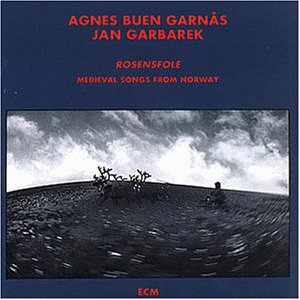
Hola a tod@s. Este es mi primer aporte, por lo que no estoy seguro de hacerlo bien, lo intentaré. He buscado en el foro algo sobre estos dos artistas y al no encontrar nada me ha parecido interesante subirlo. Este disco lo descubrí hace tres o cuatro años. Se trata de unas canciones "típicas" noruegas, desde canciones de cuna hasta cantos utilizados por los pastores... curioso.
Espero que os guste tanto como a mí.
Agnes Buen (Voces) Agnes Buen Garnås (born 23 November 1946) is a Norwegian folk singer from the county of Telemark. She comes from a famous musical family from the town of Jondalen, and is known particularly for her singing of ancient unaccompanied Norwegian ballads, as well as her updated arrangements of these songs in collaboration with the Norwegian saxophonist Jan Garbarek on the ECM album Rosensfole. Fuente
Jan Garbarek (Instrumentos) Jan Garbarek (born 4 March 1947 in Mysen, Norway) is a Norwegian tenor and soprano saxophonist, active in the jazz, classical, and world music genres. Garbarek was the only child of a former Polish prisoner of war Czeslaw Garbarek and a Norwegian farmer's daughter. Effectively stateless until the age of seven (there is no automatic grant of citizenship in Norway) Garbarek grew up in Oslo. At 21, he married Vigdis. His daughter Anja Garbarek is also a musician. Fuente
"Transparente", editado el 2005, ha sido producido por el brasileño Jaques Morelenbaum, e incluye poemas de Florbela Espanca, Fernando Pessoa y Alexandre O’Neill. El CD ha sido grabado en Rio de Janeiro a principios de ese año y en palabras de la propia Mariza "pretende tratar el fado con dignidad y sin imponer límites".
Es evidente la gran madurez de la fadista en la interpretación de todos los temas, en un trabajo que acentúa "la sonoridad de Mariza" y refleja una postura más personal, si cabe, a la hora de abordar el fado.
Además de temas inéditos, creados, entre otros, por Aldina Duarte, Mário Raínho, Paulo Carvalho, Pedro Campos y Paulo Abreu Lima, la fadista vuelve a interpretar a Fernando Pessoa y Florbela Espanca. Del poeta de "Mensagem", Mariza interpreta "Há uma música do povo", con música de Mário Pacheco. En cuanto a Florbela Espanca, Mariza canta "Desejos vãos" con música de Tiago Machado. Otros poetas escogidos son Alexandre O’Neill, con "Há palavras que nos beijam", musicado por Mário Pacheco, y Vasco Graça Moura: “Toada do desengano”.
El primer single es "Meu Fado meu", un tema con letra y música de Paulo de Carvalho, que firma también "Fado português de nós". Otros temas inéditos son obra de Fernando Tordo ("Fado Tordo"), Aldina Duarte, ("Malmequer",que Mariza interpreta en Fado Menor), Pedro Campos, ("Montras"), Mário Raínho, ("Recusa", cantado en Fado Magala) y el dúo Paulo Abreu Lima e Rui Veloso, creadores de "Transparente", el tema que da título al álbum.
Por otra parte, entre los 14 temas que constituyen "Transparente", editado por EMI Music, tres son recreados por Mariza como tributo a Amália Rodrigues, Fernando Maurício y Carlos do Carmo: "Medo" (Reinaldo Ferreira/Alain Oulman), "Quando me sinto só" (Artur Ribeiro/Fado Alexandrino de Joaquim Campos) y "Duas lágrimas de orvalho" (João Linhares Barbosa/Pedro Rodrigues). Fuente
Pistas:
01 - Há uma música do povo 02 - Meu fado meu 03 - Recusa 04 - Quando me sinto só 05 - Montras 06 - Há palavras que nos beijam 07 - Transparente 08 - Fado português de nós 09 - Malmequer 10 - Medo 11 - Toada do desengano 12 - Fado torto 13 - Duas lágrimas de orvalho 14 - Desejos vãos
Acozaco é um quinteto de Saint Bauzille de Putois, que desde 1998 nos convida para a festa e alegria. Composta por músicos de diferentes estilos musicais, mas que cresceu com os ritmos do Mediterrâneo, esta formação nos leva a partir de 1998, a um mundo mágico, onde ninguém pode ignorar o impulso de dançar ... Normal, Acozaco faz uma mistura eficiente de rock, folk e musette. Guitarras e acordeons duelam e simultaneamente tocam em uníssono em uma relação dicotômica que é conduzida magistralmente pelo vocalista do grupo. Após dois álbuns ("Pinocchio" em 1998 e "La Malle à excuses", em 1999), o grupo tinha sido um pouco ausente da cena. Ultimamente, eles retornaram com alguns músicos novos mas com a mesma alegria e competência de sempre
Músicos: Cédric Bouvié: voz Christophe Cambon: guitarras Dominique Fittipaldi: baixo, back vocals Joseph Hirsh: accordeon Jean Oltra: bateria, percussão
Vídeo
MÚSICAS 01 - L'horaire 02 – Méditerranée 03 – Paris 04 – Michou 05 - Mister Bin 06 - St Mecisse 07 - Le Goinfre 08 - Acqui Oïl 09 - Les Grandes Gueules 10 - Le Méchoui 11 - La Malle À Excuses
Los Andariegos es un conjunto folclórico argentino creado en San Rafael (Mendoza) en 1954. Está considerado como uno de los más importantes grupos de la historia de la música folklórica de Argentina. Publicaron 12 álbumes oficiales originales, el último de ellos en 1986. Se caracterizaron por los arreglos vocales, siendo los primeros en la música folklórica argentina en incorporar las tercera, cuarta y quinta voces.
Entre las canciones más conocidas aportadas al cancionero argentino se encuentran "Chayita del vidalero" (Ramón Navarro) y "Canción para un niño en la calle" (Armando Tejada Gómez-Ángel Ritro), "El cóndor vuelve" (Armando Tejada Gómez-Eduardo Aragón). Entre los álbumes se destacada Madre Luz Latinoamérica (1976).
Su primera formación estuvo integrada por Pedro Floreal Cladera (Chacho Santa Cruz), Rafael Tapia, Juan Carlos "Pato" Rodríguez, Ángel Ritrovano (Cacho Ritro), Abel González y Francisco "Rubio" Giménez. En 1958 grabaron el primer álbum, Aquí están los Andariegos.
En la década de 1960 el grupo adhirió expresamente a los principios del Nuevo Cancionero promovido desde Mendoza por Mercedes Sosa, Armando Tejada Gómez y Oscar Titus, volcando más su cancionero hacia temas latinoamericanos y de contenido social. A su vez, el grupo fue modificando su integración original, permaneciendo solamente Ángel Ritro, quien realiza los falsetes que marcaron el estilo del conjunto, e incorporándose músicos como Raúl Mercado, Agustín Gómez y Karo Herrada.
En 1976, a pocas semanas de haber tomado el poder la violenta dictadura llamada Proceso de Reorganización Nacional, publicaron el álbum Madre Luz Latinoamérica, su obra culminante.[1] su obra culminante y al mismo tiempo una manifestación crítica, que los haría víctimas de amenazas.[2] En aquella oportunidad el grupo había escrito lo siguiente en la contratapa del álbum
En 1978, la persecución política obligó a que Ángel Ritro debiera exiliarse en España y Raúl Mercado en Francia, lo que llevó a la disolución del grupo. Con posterioridad los integrantes que permanecieron en Argentina, Agustín Gómez y Karo Herrada, lo reorganizaron integrando a Carlos Groisman y Héctor Staforini. Pero en 1981 falleció Karo Herrada y el grupo se disolvió.
En 1991 Agustín Gómez refundó nuevamente a Los Andariegos, primero como cuarteto junto a Juan Carlos Varela, Andrés Gómez y Jorge Giuliano, y luego como quinteto sumando a Néstor Basurto.
En 1998, Gilberto Piedras les propuso a los propuso volver a reunirse a los tres integrantes aún vivos de la formación que el grupo tuvo en la década de 1970 (Ángel Ritro, Raúl Mercado, Agustín Gómez), para formar un quinteto al que se sumó también Leonardo Sánchez. En 2001, con esta composición, realizaron una gira junto a Alberto Cortéz por diversas ciudades de España que culminó con una histórica presentación en el Teatro Olympia de París. En 2003 realizaron sus últimas actuaciones en las Islas Canarias, sin Agustín Gómez, quien no estaba en condiciones para viajar, a quien reemplazó Roberto López.
Me voy a poner de pie ,para aplaudir a estos Maestros de mi tierra...Quien dijo que los podian callar...maria antonieta
TEMAS
01) ESPERANZA EN LOS DÍAS QUE VIENEN - canción - (Augusto Tamayo Vargas-Raúl Mercado), Voz Solista: Alberto Sará, Coro: Los Hijos de los Andariegos
02) LA ARENOSA - cueca - (Gustavo Leguizamón, Manuel J. Castilla), quena: Raúl Mercado, charango: Ángel Ritro, guitarra: Agustín Gómez, guitarrón: Alberto Sará.
Ska Cubano is a London-based group which combines ska and Cuban music such as son and mambo, with elements of other genres including cumbia and calypso. The group was put together by investment manager Peter A. Scott, who in his own words "decided to create an alternative history in which Cuban ska had emerged". He travelled to Santiago de Cuba with Top Cats singer Natty Bo (Nathan Lerner) in 2001 and there they rehearsed and recorded the Ska Cubano album over a two-year period mainly with local musicians including singer Beny Billy (Juan Manuel Villy Carbonell). In late 2004, Scott and Bo decided to go for a less Cuban sound and formed a line-up in London mainly using UK-based Cuban and other Caribbean musicians (three of whom were/are also members of Top Cats, Natty Bo's traditional ska band ). After some experimentation , with Natty Bo as leader and vocalist, the permanent core of Ska Cubano became : Cubans ( from Havana ) Rey Crespo and Ernesto Estruch, Jesús Cutiño (Las Tunas), Oreste Noda (Matanzas) and Kico Cowan (Camaguey), together with , from Montserrat, Dr Sleepy (Reuben White), from Spanish Town , Jamaica , Eddie "Tan Tan" Thornton , from Chiba City , Japan, Miss Megoo ( Megumi Mesaku ) and Londoner Trevor Edwards , with Beny Billy commuting from Santiago for recordings and performances. In 2006 Venezuelan Carlos Pena gradually took over as co-lead singer, although Beny continued to record and occasionally tour with Ska Cubano. More recently trumpeter Jay Phelps began to perform and record with the band. The second Ska Cubano album, ¡Ay Caramba!, was nominated for a BBC World Music Award in the "Culture Crossing" category.[3] The album was described as "imaginatively crafted, brimming with melody, wit and a joyous fusion of rhythms, this album’s about as much fun as you can have with your clothes on". According to the website all.about.jazz their third album , "Mambo Ska" , released in May 2010 , is "A blast - a raucous, riotous, irresistible blast...high octane party and festival music of the first order".
Ska Cubano have performed at major festivals worldwide including Glastonbury, Big Day Out, and WOMAD, and toured , to date, in 30 countries.
Band members:
* Natty Bo (Nathan Lerner) - vocals * Carlos Pena - vocals and minor percussion * Beny Billy (Juan Manuel Villy Carbonell) - vocals * Miss Megoo ( Megumi Mesaku ) - alto and baritone saxophones * Trevor Edwards - trombone * Kico Cowan - tenor saxophone and flute * Rey Crespo (musical director) - double bass and marimbula * Jesús Cutiño - tres (Cuban 3x2-strung guitar) * Ernesto Estruch - piano, organ and violin * Oresta Noda - congas and pailas * Dr. Sleepy (Reuben White) - drumkit * Tan Tan ( Eddie Thornton ) - trumpet * Jay Phelps - trumpet FUENTE
Track list:
01- Istanbul (Not Constantinople) 02- Tabú 03- Oye compay Juan 04 - No me desesperes 05 - Tungarara 06 - Big bamboo 07 - Cachita 08 - Soy campesino 09 - Jezebel 10 - Marianao 11 - ¡Ay caramba! 12 - Chispa tren 13 - Bobine 14 - Cumbia en do menor 15 - Natty no dead (Sammy no dead) 16 - Jezebel (Instrumental Bonus Track) 17 - La boquilla (Bonus Track)
El grupo madrileño Radio Tarifa nace hacia finales de los años 80 del encuentro de Faín S. Dueñas, percusionista, cuerdista y arreglista del grupo, Benjamin Escoriza, cantaor y letrista granadino, y Vincent Molino, instrumentista de viento.
Muy bien acogido por la crítica especializada española e internacional, este primer trabajo discográfico (Rumba Argelina) tuvo al principio una difusión confidencial que se amplió cuando una multinacional del disco fichó al grupo para una nueva producción, "TEMPORAL", editado a finales de 1996. En 1994 se había formado el grupo en directo, con 8 músicos y un bailaor que han llevado la música de Radio Tarifa a numerosas ciudades españolas y diversos países extranjeros.
Temporal es un disco completo que sorprenderá al oyente, un viaje a través el territorio español donde se recoge temas de la tradición popular de varias regiones (flamenco, folklore andaluz, castellano y gallego) integrando las influencias de las culturas que han marcado su evolución (arabo-andaluza, sefardí, cubana, medieval europea, etc..)
"Los diez temas que componen este nuevo trabajo de Radio Tarifa vuelven a incidir en el mestizaje razonable y razonado, en el cruce de sensibilidades, en la comunión de ritmos y cadencias de todo el universo mediterráneo. La experiencia musical de los miembros del grupo es totalmente innovadora. Lo suyo no es museísmo folklórico ni adaptaciones arqueológicas. Radio Tarifa investiga en los sonidos del pasado para crear una música actual y viva, llena de matices, una música que nos suena aunque no sepamos por qué." Ricardo Aguilera - DIARIO 16 - Madrid - Octubre 1996FUENTE